This is the third chapter in a multi-part history lesson. To read the previous installment, click here.
As Genghis Khan's forces massed at the Great Wall, debate raged within the pug parliament. A battle with the warlord would no doubt prove bloody. Though the pugs were confident that their superior intellect and military might would help them prevail, they preferred to avoid an unnecessary conflict. Centuries of war had left many of the dogs weary. They had long ago traded in their thrice-daily naps for careers as soldiers and merchants and artisans. Nerves were frayed and hackles were raised as the dogs sought a solution. Finally, a consensus emerged within the pug parliament around a charismatic leader named Sun Mugtzu. This pug, bigger than most, with a perfectly concave face and exquisite jowls, was unanimously elected emperor of the canines. He raised a million-pug army -- unheard of in that time -- and embarked on his rendezvous with destiny.
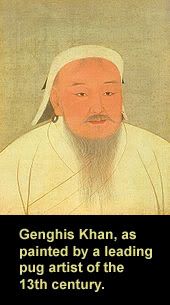 Sun Mugtzu stood atop the Great Wall looking down upon Genghis Khan's sea of warriors. The Mongol encampment stretched to the horizon and beyond, with longbows angling skyward and swords glinting in the evening sunlight. He told the Mongols of the massive pug army on the other side of the wall, and of the certain death that awaited many of the rebels should they seek to invade. The pugs held the high ground and could strike far behind the Mongol front lines with their advanced artillery. Plus, scores of pug ninjas had already infiltrated the camp and stood ready to attack at a moment's notice.
 After Sun Mugtzu's show of strength, he invited Genghis Khan to meet him atop the Great Wall. Sun Mugtzu allowed the warlord a glimpse of the pug legions below and then spoke. "Temujin," he barked, using the Mongol's birth name. "We stand on the brink of war. But war is not what we seek. We pugs have spent centuries building our empire, and although we eat the finest treats and receive unlimited belly rubs and possess riches beyond human comprehension, we desire more. I come to offer you a deal."
The Mongol seemed taken aback. He had trained his whole life for this moment, for his opportunity to throw off the yoke of pug rule. He stood ready for a fight. Yet the wise old pug appeared ready to negotiate. Genghis Khan nodded apprehensively. "I'm listening," he said.
To be continued ...

